
Prison Life
Although the New Gaol at Kilmainham was built in answer to the poor conditions of eighteenth-century prisons, it was soon troubled by the very same problems — largely because of overcrowding. For most of the nineteenth century, until at least the 1860s, overcrowding brought disease, poor health and hygiene, and no full separation of adults from children or men from women.
The causes were several: the Gaol’s use as a holding depot for convicts awaiting transportation to Australia, the onset of the Great Famine and the surge in offences involving the theft of food, and the imprisonment of people with mental illnesses as criminals. With too little accommodation, cells designed for one person at one point held as many as five. The Vagrancy (Ireland) Act of 1847, which compelled the arrest of beggars, made conditions worse still.
Numbers of these wretched creatures are obliged to lie on straw in the passages and dayrooms of the prison without a possibility of washing or exchanging their own filthy rags for proper apparel… The committing of vagrants led to the introduction of fever and dysentery into a crowded prison and the sacrifice of many lives.
Report of the Inspector General, 1847
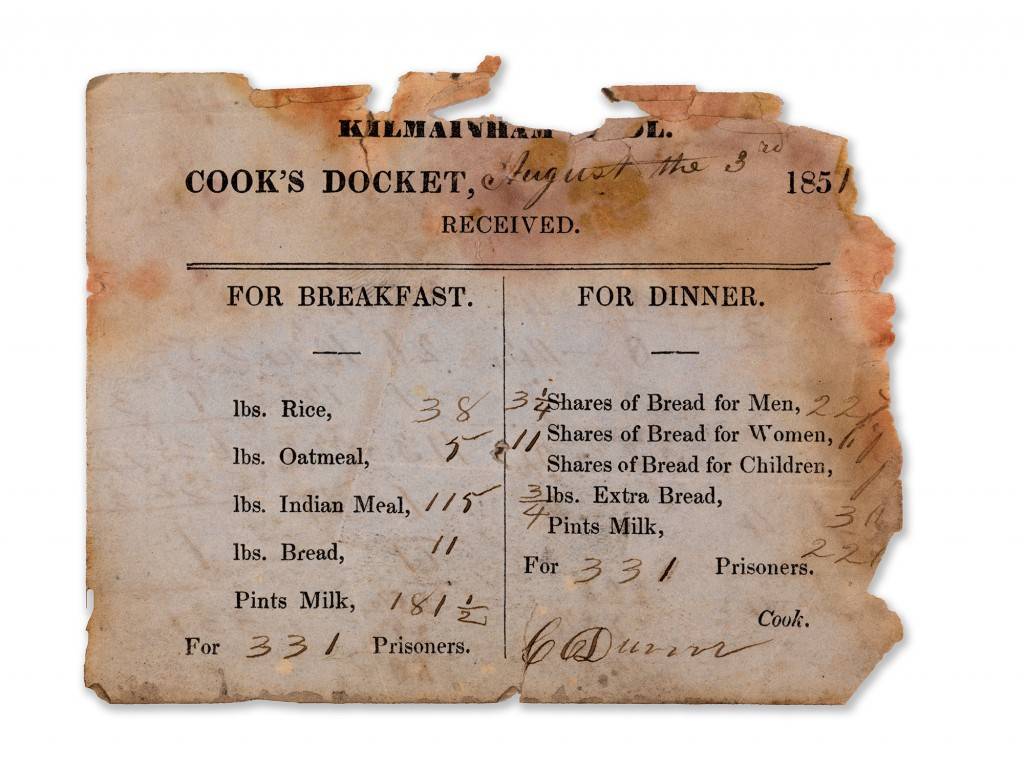
Food rations were very low during the Famine years, and were cut further once it became clear that some people were committing crimes simply to get into the Gaol and be fed. Potatoes, once a staple, disappeared from the prison diet as they did everywhere else in Ireland; bread and meal replaced them and potatoes were not reintroduced until 1855. Men, women and children received different measures. A typical daily diet for a man in the mid-nineteenth century was Indian meal (corn) and milk for breakfast, and bread and milk, gruel or soup for dinner.
Inmates were separated for exercise. The transportation yard held two walking circles: one shared by those condemned to execution and those condemned to transportation, the other for prisoners serving temporary sentences. Women used a smaller yard nearby, and children had their own small yard close by but separate. Every inmate was allowed one hour outdoors each day.
Prisoners also worked inside the Gaol. Hard labour for men meant breaking stones by hand in the Stonebreakers’ Yard; for women it meant the laundry. From 1844 inmates also made and repaired their own uniforms. Other work included cleaning cells and common areas and providing a form of care to those described as ‘lunatics’. Children serving more than two weeks received weekly school lessons from the chaplain.
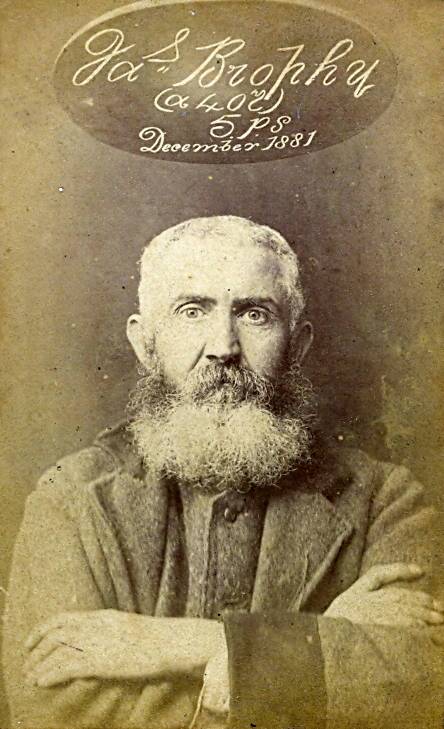
Throughout the Gaol’s history the overwhelming majority of its population were ordinary criminals rather than political prisoners. When it first opened, half of all prisoners were debtors; the remaining offences ranged across robbery, assault, rape, murder, bigamy, illicit distilling and counterfeiting coins. People found to be mentally disabled were jailed too, as were beggars. Food-related theft rose sharply during the famine years. In most cases the offences were very minor — the debts owed by many early convicts amounted to tiny sums of money.
Conditions for women stayed persistently worse than for men. A mother of a baby under twelve months old often kept the child with her for the length of her sentence. After the bright new East Wing opened in 1861, men moved there while women remained in the darker, older West Wing. Status mattered as well: poorer inmates were fully subject to the Gaol regime, while wealthy and prominent prisoners such as Charles Stewart Parnell could furnish several cells with their own possessions and receive visitors freely.
Details of those imprisoned in Kilmainham Gaol survive in twenty-four large volumes, now held by the National Archives of Ireland.